Run your whole eBay business from one app.
From the buy decision in the aisle, to the listing, to the shelf it sits on, to the pricing that keeps working overnight, to the books at the end of the year. One app doing the job of four, and the parts you would otherwise do twice.
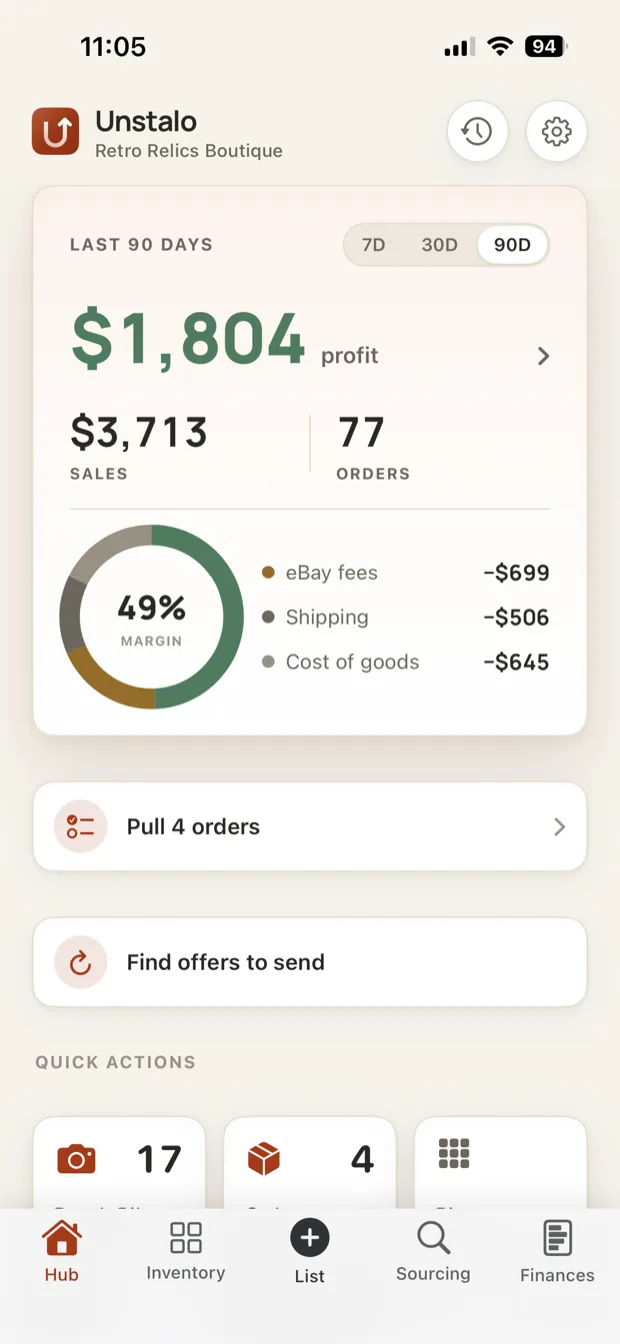
Closed TestFlight beta. App Store launch later this year.
One item, all the way through.
Normally you research an item at the yard sale, buy it, carry it home, and research it again a week later to list it. Then the cost lives in your head, the item lives in a pile, and the profit is a guess. Here is what one item looks like moving through a single app instead.
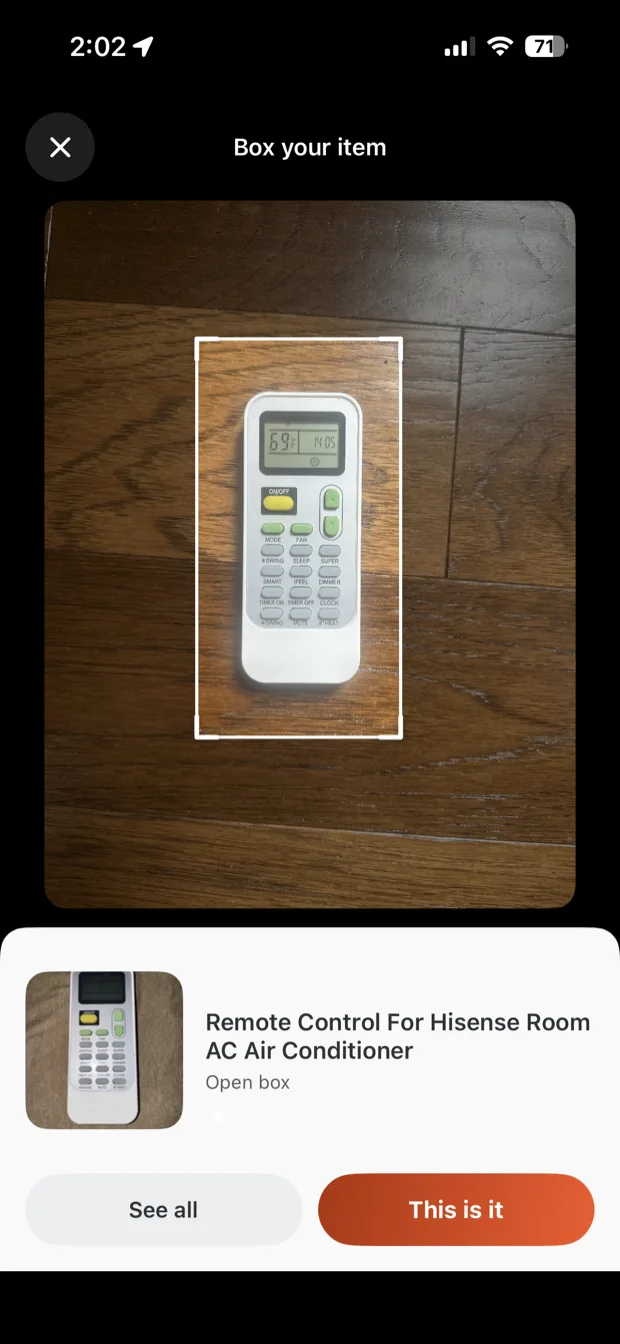
Point your camera at it. Get an answer.
You do not need the barcode. Snap a photo and it identifies the item off live eBay listings. You confirm the match, it never guesses. A second later you have active comps, where they actually sit, sold prices, two years of trends, and a ceiling: the most you can pay and still hit your target return. Prefer a barcode or a quick search? Those work too.
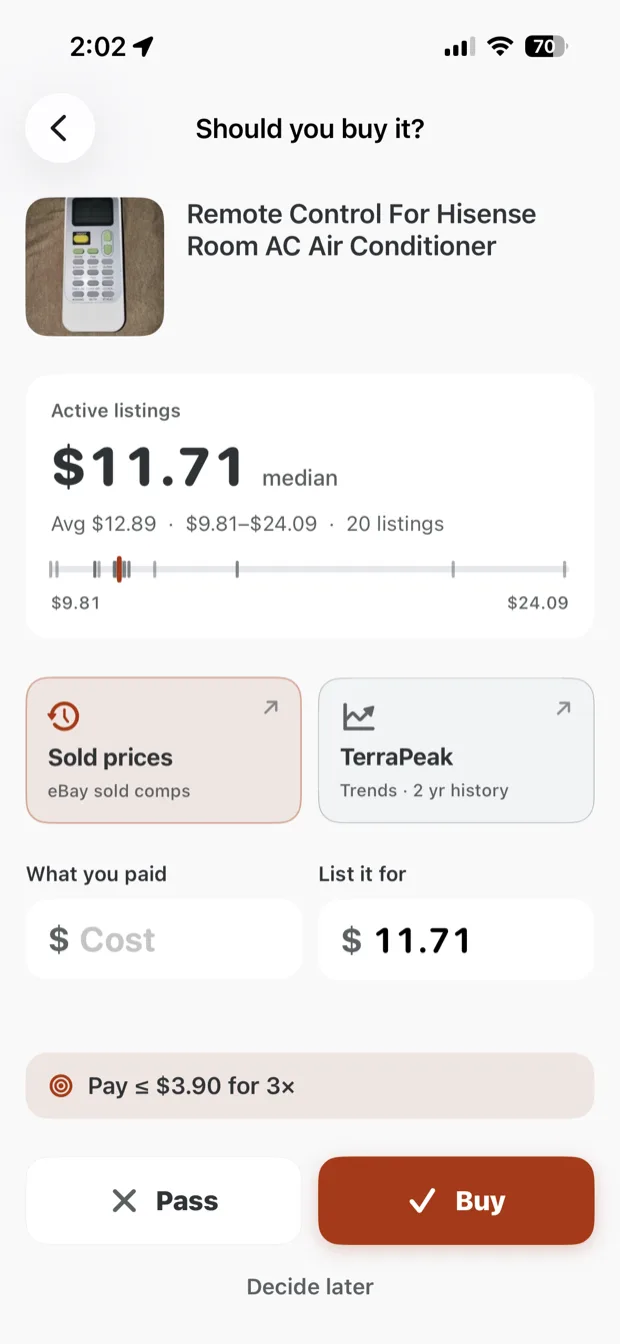
The pile knows what it cost you.
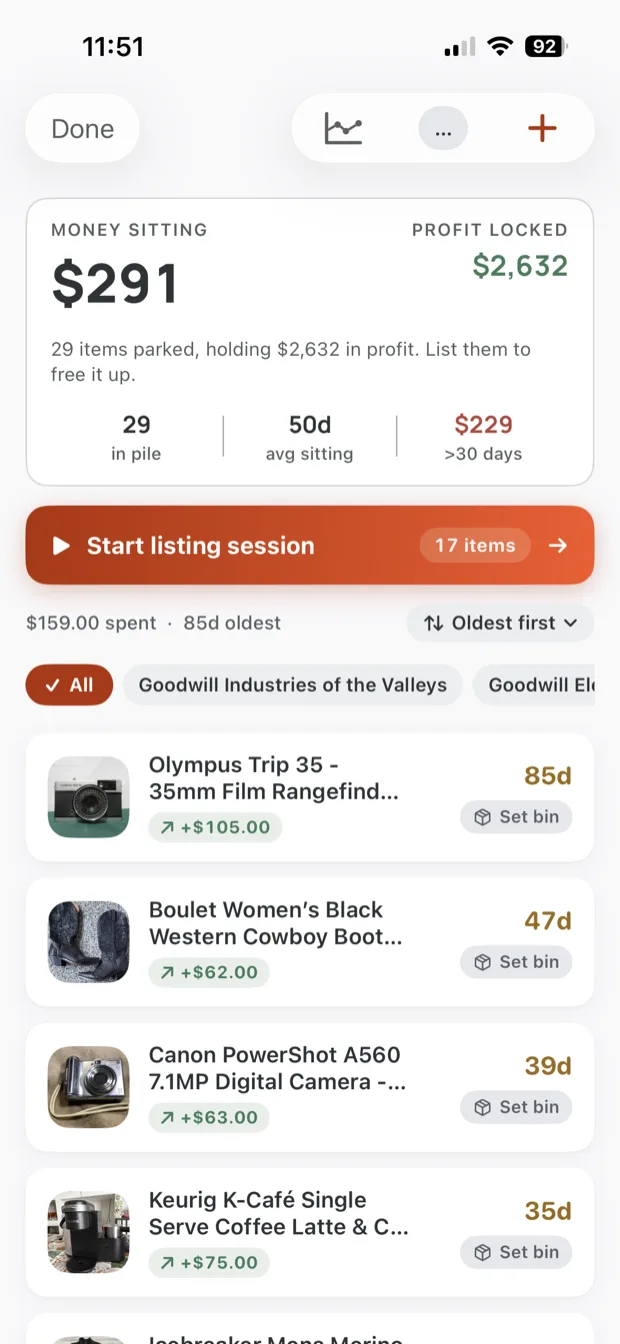
Tap Buy and it is already filed, in your death pile, in that trip's debrief, in the running tally of which store actually pays, and in your mileage for the drive. The pile stops being a guilt heap and starts being a number: what is sitting there, and how much profit is locked in it.
The draft is already written.
Title, category, condition and item specifics carried from the listing you matched in the store. What you paid, already in. Your target price, already in. Best offer, international, shipping profile, handling time, returns and promoted rate come from a template you set once. All that is left is photos.
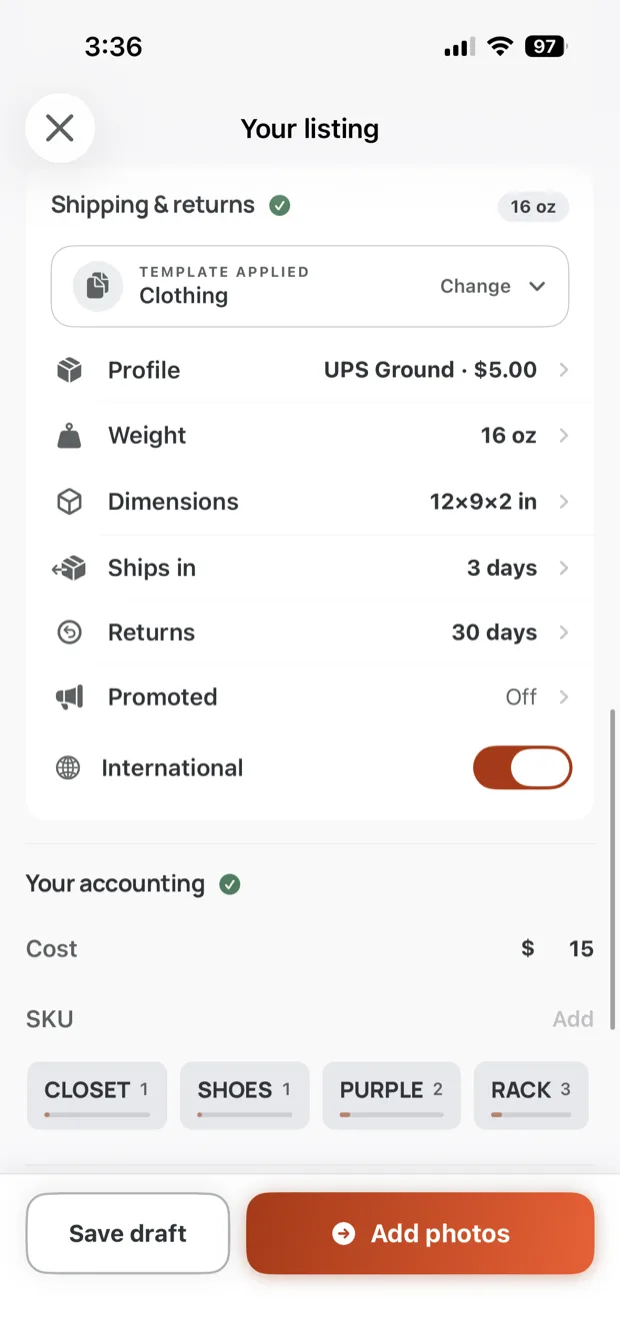
Then you can actually find it again.
It goes in a bin, and once listed the bin label is its SKU, one field, not two systems drifting apart. Print QR labels for your totes and scan one with your camera to jump straight to that bin. Every shelf shows what is on it, what it is worth, and how long the average item has sat there; when something sells, picking is one walk in bin order.
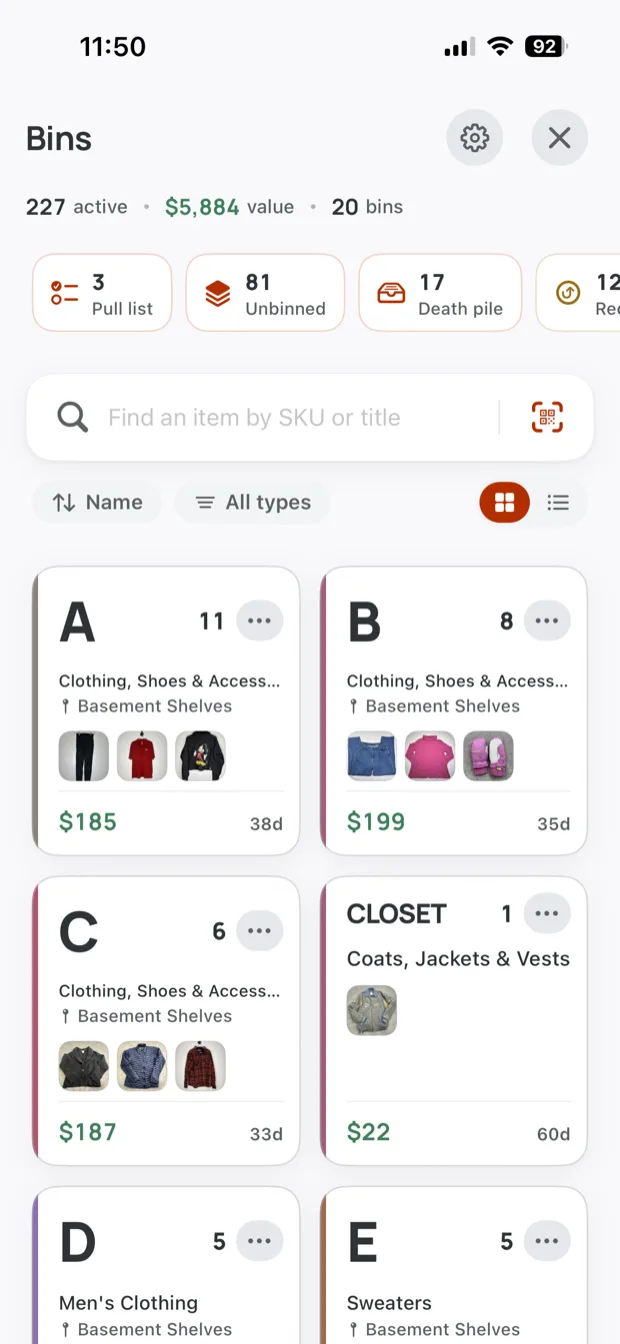
And that is before it sells. From here Autopilot works the listing overnight, offers get priced against what you would actually take home, and every fee, cost and mile lands in one profit number you can hand to an accountant.
Most serious resellers are running four tools and a spreadsheet.
None of them know about each other. The comp checker does not know what you paid, the spreadsheet does not know what sold, and nothing at all knows which shelf it is on. That is the actual work: keeping five things in sync by hand.
- A listing tool to get items up faster, with your policies already applied.
- A repricing or relist tool to keep stale inventory moving without doing it by hand.
- A comp checker to decide what something is worth before you buy it.
- A spreadsheet for cost of goods, mileage, and whatever the accountant asks for.
- A note on your phone for which bin it went in and what you actually paid.
One app, one subscription, and the pieces actually talk to each other, because what you paid in the aisle sets your price floor and lands on your Schedule C.
Stale listings are a chore.
Autopilot makes them a schedule.
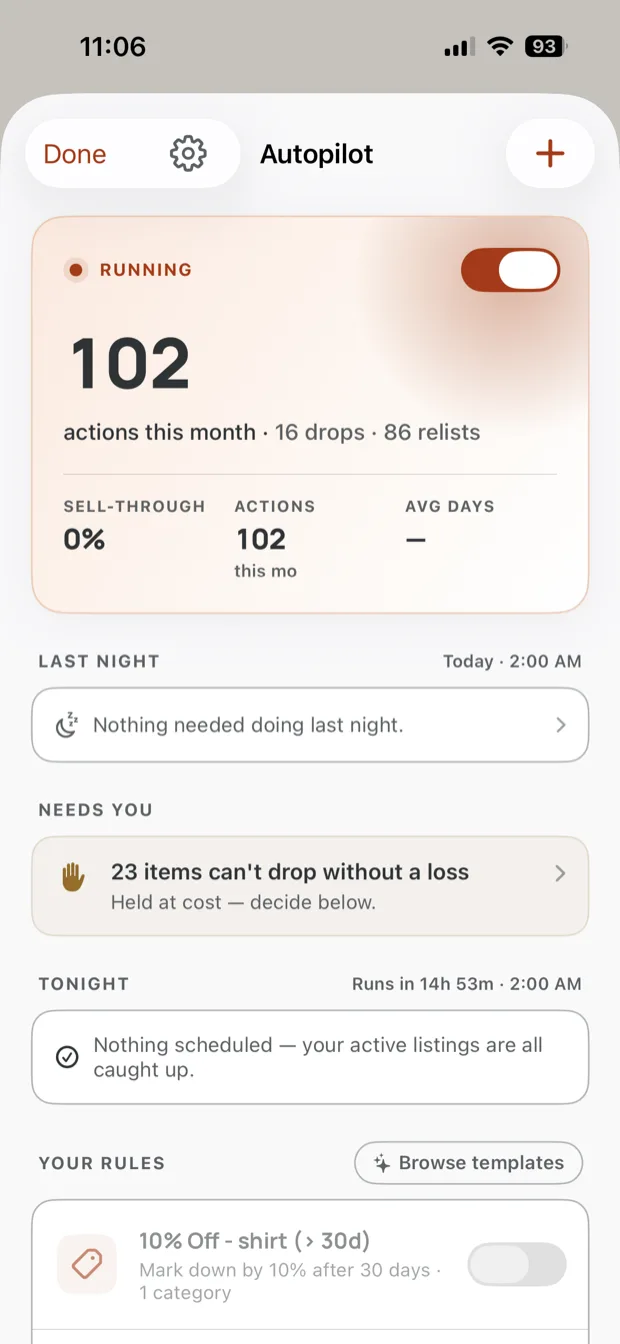
Every night, Unstalo works the listings that have gone quiet. It ends and relists them as new, or drops the price, whichever the item needs, inside limits you set. You wake up to a report, not a surprise.
- 01Last night
What actually ran, and what it did. On a quiet night it says so: “Nothing needed doing last night.”
- 02Needs you
Only the calls it won’t make alone: “23 items can’t drop without a loss. Held at cost, decide below.”
- 03Tonight
Every planned action before it runs, with a countdown to 2:00 AM and a veto on each item.
- 04Your rules
The rules you’ve set, like “10% off after 30 days,” each switchable, plus templates to start from.
Four zones, one screen, in that order, so the whole operation reads as one story.
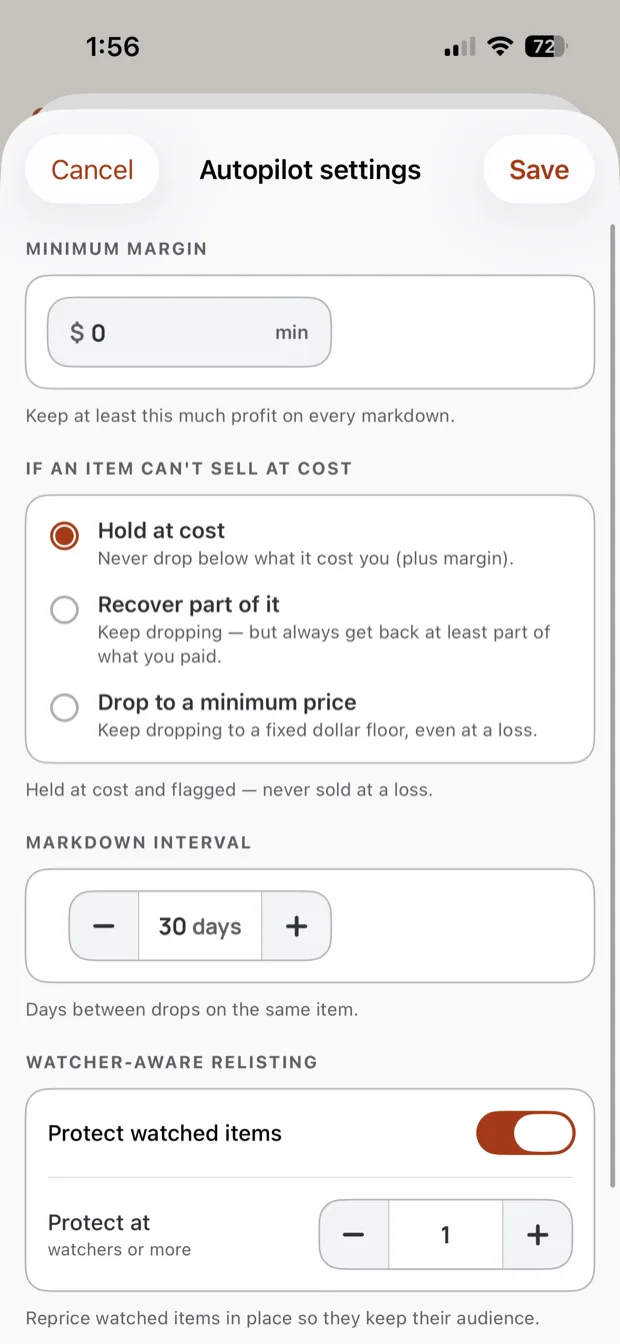
Hold at what you paid, recover a set percentage of it, or set a hard minimum price. Autopilot marks down toward that line and stops.
Any item can be told to keep dropping, hold its price, or sit tonight out. Your override outranks the rule.
When your zero-insertion-fee listings run out, relists divert to free price drops instead of quietly costing you money.
Tonight’s queue is visible before it runs, and last night’s results are the first thing you see.
Autopilot works through eBay’s own listing APIs, running once a night at 2 AM in your time zone. It never raises a live price, never drops below the floor you set, and shows you every action before it runs. Watched listings are repriced in place when there is a drop to deliver, so they keep their audience.
Every number here rests on
what you actually paid.
Profit, the floor Autopilot works above, and your Schedule C all reduce to one figure, and it is the one most resellers never record. Unstalo takes it at the moment you buy, and keeps chipping at whatever you already own.
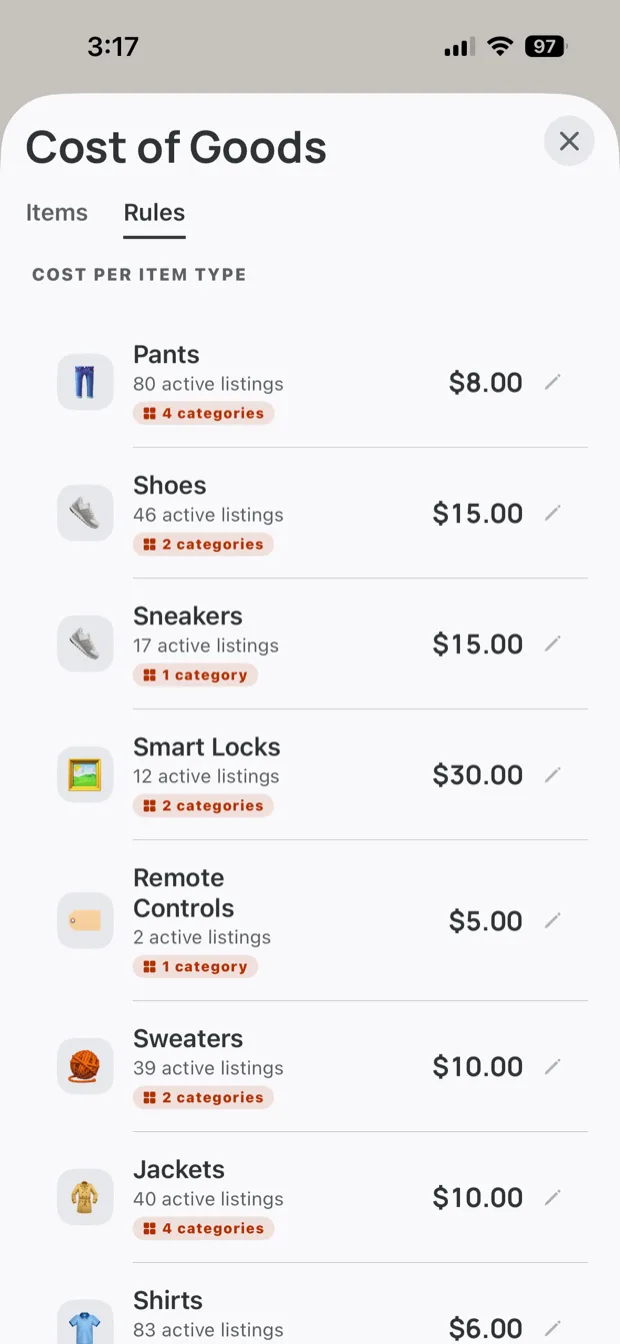
Tap Buy while you are still in the store and what you paid is recorded, grossed up by your local sales tax into a real landed cost. Not a shoebox of receipts to reconcile in April.
Set a cost once per item type and it fills in the moment you list. Anything you typed by hand is never overwritten, and a rule can never retroactively cost something you already sold.
Uncosted items get grouped by type with a suggested cost drawn from the median of what you have actually paid for that type before. Your own history, never an invented number. Approve a bucket and it costs every item in it.
A known cost becomes a floor your markdowns work above. Items that cannot drop any further without a loss get held and flagged for you to decide on, rather than quietly selling at one.
And until every sale in a window has a cost against it, the home screen will not show you a profit figure for that window at all. It tells you how many sales are missing one, and takes you straight to them.
Know what an offer is really worth
Every incoming best offer, priced against your actual take-home: offer, minus eBay fees, minus what you paid. The fee rate comes from your own settled sales once you have the history, rather than a flat 13% guess.
- Take-home and profit, before you accept or counter
- Comps beside the offer, framed as a percentage of the median asking price
- The full back-and-forth, including what you last countered, which is easy to lose track of
Numbers an accountant will take
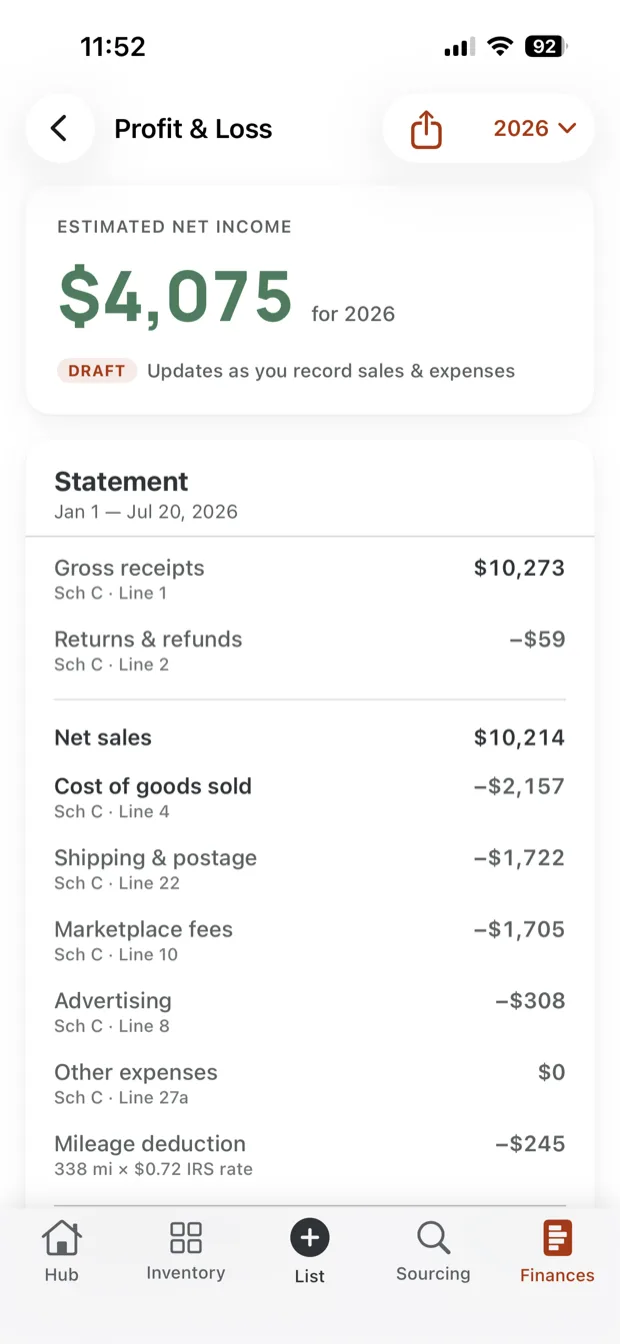
Gross receipts, cost of goods, fees, shipping and mileage, already mapped to the Schedule C lines they belong on. Estimates to hand your CPA, not tax advice; the app says so itself.
- Rolling 7, 30 and 90-day profit with the change against the period before
- Mileage tracked per trip at the IRS rate, not reconstructed in April
- Export the Schedule C as a CSV, or a by-bin inventory report as CSV or PDF, hand it over as is
- Edit any live listing from inventory (title, price, specifics) with AI to rewrite it
One subscription. Never a cut of your sales.
Most serious resellers stack two to four tools to run a store. This is meant to replace the stack for less than any one of them costs.
Pay month to month.
- Autopilot, sourcing, AI listing, and profit tracking
- Unlimited listings and sourcing trips
- Cancel anytime in iOS Settings
Works out to $12.50 a month.
- Everything in monthly
- Saves $90 against paying monthly
- Locked in at launch pricing
Nothing is for sale yet. Unstalo is in closed beta and free for beta testers. At launch, subscriptions will be billed through the App Store and managed in iOS Settings → Apple ID → Subscriptions.
It has to make you more
than it costs you.
A flat subscription, never a cut of your sales. Beta invites go out in small batches so the feedback stays useful. Leave your email and we’ll send a TestFlight link when a spot opens.